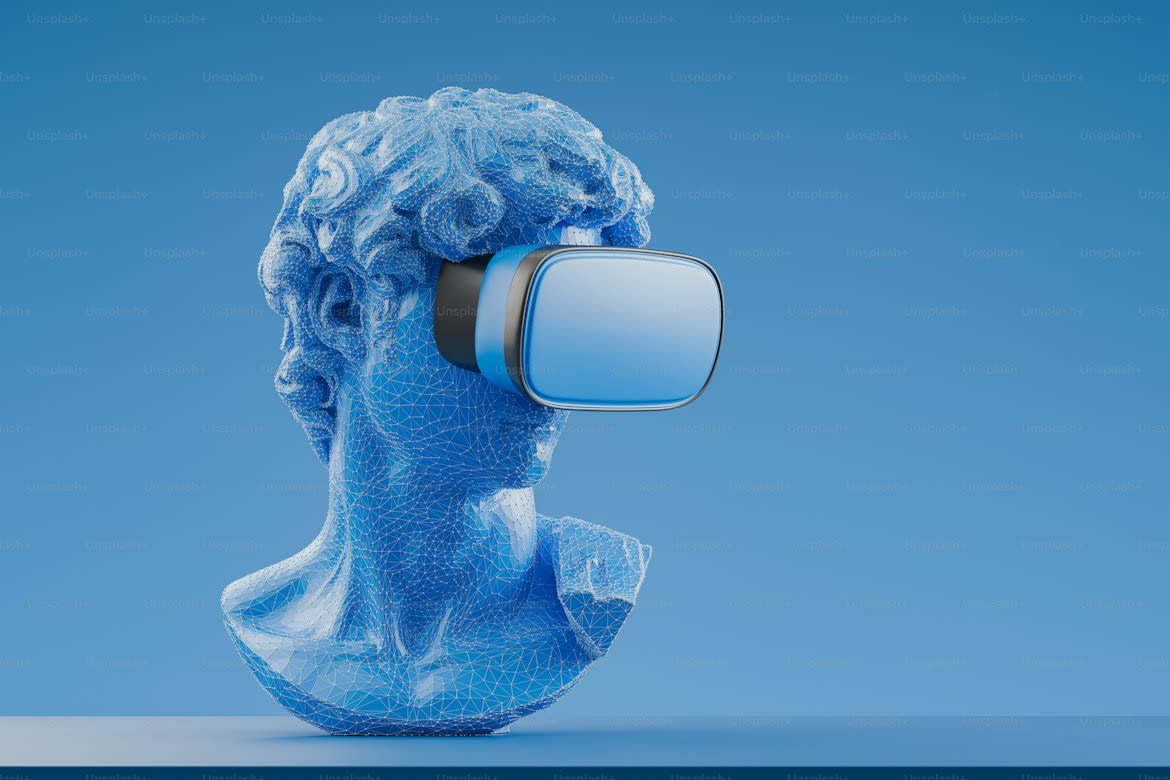
Immersive Travel Apps Using AR and VR to Educate, Engage and Preserve Cultural Heritage — Industry Example
An illustrative scenario: Immersive Travel Apps Using AR and VR to Educate, Engage and Preserve Cultural Heritage. Explore technical options and implementation considerations; no verified client outcomes are claimed.
Engage with this study
Study Stats
About this industry example
This page presents an illustrative industry scenario adapted from the supplied source content. It is not a verified client project or a claim that Krazio Cloud delivered the deployment described. Proposed benefits require validation through a scoped pilot and measured evidence.
Introduction
The travel industry is evolving rapidly, driven by the demand for immersive, tech-enabled experiences that go beyond sightseeing. Traditional tourism, especially at historical and cultural landmarks, often falls short in captivating modern travelers who seek engagement, storytelling and interactivity. This shift is particularly evident among millennial and Gen Z travelers who want to connect emotionally and intellectually with the places they visit. Through virtual guides, 3D reconstructions of ancient architecture and location-based AR triggers, the app brings history to life-right on the visitor’s smartphone or headset. This case study explores how the solution boosted tourist engagement, education and local economic value while preserving cultural authenticity.
Overview (What It Is and How It Works)
The AR/VR-powered travel app is designed to augment on-site tourism experiences at historical landmarks, monuments and heritage destinations. Visitors can download the app before arrival or at the entrance of a site. Once launched, the app detects the visitor’s location through GPS and uses the phone’s camera to overlay contextual digital information over real-world elements. For example, when a traveler points their phone at the ruins of an ancient fort, the app reconstructs the original architecture in full 3D, showing what the site looked like centuries ago. A virtual tour guide appears-often modeled after a historical figure-who narrates facts, myths and timelines in the user’s chosen language. Visitors can tap on icons to explore more layers, including mini-documentaries, interactive maps or even historically accurate music and ambient sounds. For destinations that lack preserved structures or are under conservation, the VR component of the app allows remote virtual tours. Using a mobile VR headset, users can walk through a digitally recreated palace or temple, explore lost civilizations and experience moments in time such as coronations or battles in an interactive way. The app also includes gamification layers such as quizzes, treasure hunts and AR-based selfie filters to encourage exploration and social sharing. These features significantly increase dwell time and improve learning retention.
Technology Uses
Augmented Reality Engine The app is built on Unity with AR Foundation, ensuring compatibility with both ARKit (Apple) and ARCore (Android). This engine enables precise plane detection, surface mapping and real-time 3D object rendering over the live camera feed. It also supports light estimation and occlusion, making the virtual reconstructions appear naturally integrated with the environment. Virtual Reality Module For virtual tours, the app uses WebXR and Oculus SDKs to deliver high-quality experiences on mobile VR headsets like Meta Quest and Google Cardboard. These tours are optimized for streaming or offline access, making them accessible even in low-connectivity areas. The VR content is rendered using high-poly 3D assets, photogrammetry and panoramic textures to maintain visual realism. Geo-Fencing and AR Triggers The platform includes location-based AR activation, where certain experiences are unlocked based on GPS proximity. For instance, when a visitor stands in front of a specific monument, a virtual animation or voice-over automatically launches. QR code fallback is provided for areas with GPS interference. AI-Powered Multilingual Narration The app offers AI-generated voiceovers and text narration in multiple languages to support domestic and international travelers. Using NLP (Natural Language Processing) and TTS (Text-to-Speech), the guide adapts its speech speed and tone for children, adults or users with accessibility needs. 3D Reconstruction and Animation These models are animated to show transformations over time, from original construction to present-day ruins. Backend CMS and Analytics A custom content management system allows tourism departments to upload or update site-specific AR content. Engagement metrics, heatmaps and interaction rates are tracked in real time to help stakeholders refine and improve visitor experiences.
Challenges
Ensuring historical authenticity while making visuals engaging, despite incomplete records at many sites. Hardware and connectivity limitations in rural/protected areas required offline functionality and compatibility with low-end devices. Designing a universal UI/UX for diverse travelers including children, elders and non-tech-savvy users. AR trigger reliability issues caused by sunlight, crowds, lighting variations and marker maintenance. Tourism departments lacked resources for regular content updates without a CMS.
Proposed Solution
Formed hybrid teams with historians and cultural experts to co-create historically accurate 3D models and storyboards. Optimized performance using asset streaming, progressive rendering, scene optimization and low-bandwidth 2D overlays. Inclusive UX: AI avatars, multilingual narration, age-based modes and simple onboarding improved accessibility. Multi-modal AR triggers (GPS, object recognition, image markers) with manual activation options and real-time scanning tips. Built a cloud CMS for tourism staff to upload AR content, track analytics and update experiences seasonally or event-based.
Suggested Implementation
Phase 1: Discovery and Experience Design On-site assessments evaluated lighting, coverage, GPS and flow. Workshops with experts set educational goals. UX wireframes emphasized simplicity and real-world behaviors. Phase 2: 3D Content and AR/VR Development Heritage content created using drone footage, photogrammetry and architectural renderings. Unity handled AR, Unreal Engine built VR experiences. Cloud ensured smooth delivery. Phase 3: Backend, Testing and Offline Access Developed scalable backend for analytics, localization and caching AR/VR assets offline. Tested with families, elders and global tourists for inclusivity. Phase 4: Staff Enablement and On-Site Deployment Trained tourism staff, placed instructional signage with QR codes, aligned with safety protocols. Soft launch at 3 sites refined performance before broader rollout.
Potential Benefits
Revitalized cultural storytelling with interactive, evolving narratives. Transformed tourism into multi-sensory learning for children and adults. Personalized visitor experiences with choice of depth, pace and audience mode. Economic uplift via higher dwell time, purchases and ROI-driven analytics. Seasonal content updates and paperless tourism improved efficiency and sustainability.
Future Outlook
5G, AI and spatial computing will enable seamless, real-time immersion. AI-driven virtual docents will adapt storytelling dynamically based on users. Wearables and spatial audio will add contextual ambient experiences. Cross-site narrative linkage will connect related heritage stories across regions. Integration with education systems will make AR travel apps part of school curricula. AR/VR will enhance accessibility for people with mobility or visual impairments.
Related Tags
admin
Case Study Author
Expert in travel & hospitality solutions and digital transformation, with extensive experience in creating impactful case studies that showcase real-world success stories and measurable outcomes.
Industry Focus
This case study is part of our Travel & Hospitality series, showcasing real-world implementations and success stories.
View all Travel & Hospitality case studiesMore Success Stories
Explore more case studies from Travel & Hospitality